Crafting Elegance: The Art & Design of Curved Stairs
Helical Stairs without a center pole: Where Art meets Engineering
Sculptural and functional, a helical staircase is among the most demanding and rewarding architectural elements to design. Its graceful, continuous form requires both structural precision and artistic vision to create a seamless, floating aesthetic.
Each curve begins with precise measurements. Using a 3D laser scanner, we capture the building’s existing conditions with millimeter accuracy to ensure the stair integrates perfectly with its surroundings and the landings align flawlessly. From there, our engineers and designers collaborate in advanced 3D modeling software to develop the staircase geometry.
The beauty of a helical stair lies in its flow, where each tread, stringer, and railing line leads the eye in a continuous motion. Our design team uses its creative expertise to refine these transitions, balancing proportion, rhythm, and material to craft a sculptural centerpiece that feels both organic and intentional.
Once the design is finalized, we perform Finite Element Analysis to confirm structural integrity and eliminate vibrations, ensuring the stair is as stable as it is elegant. Finally, high-resolution rendering allows clients to visualize the finished piece before fabrication, a perfect fusion of engineering precision and artistic expression.
Ideas for Curved Stairs
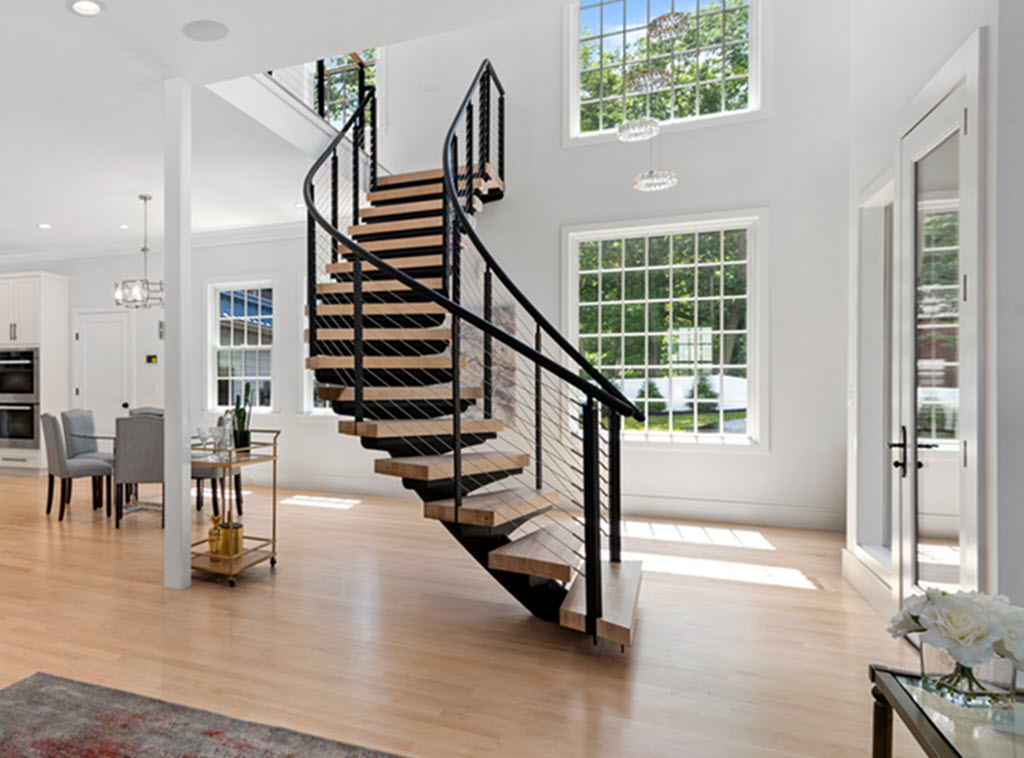
Round Mono Stringer Curved Staircase
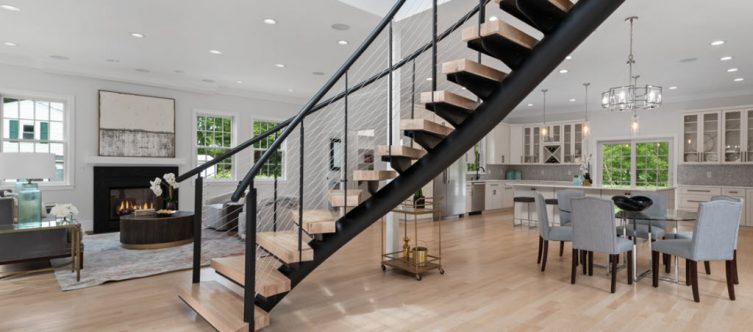
This extensive remodel was designed to open up the interior and highlight the curving staircase as an architectural centerpiece of the room. The stairs appear to defy gravity as they gracefully rise to the next level.
Construction: Made with a ten-inch round tube stringer and custom-machined maple stair treads cut to fit each step. The Ithaca cable railing posts and Keuka Cable’s unique fittings. Since we were working with an existing building structure, some creative engineering was required to ensure a solid stair.
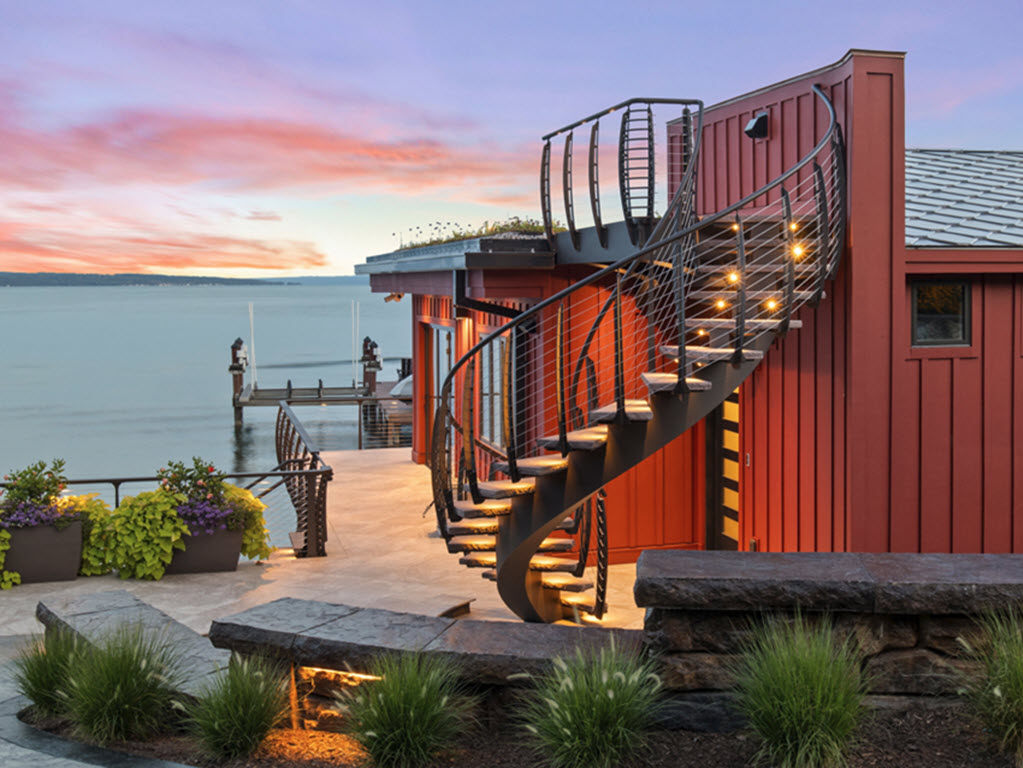
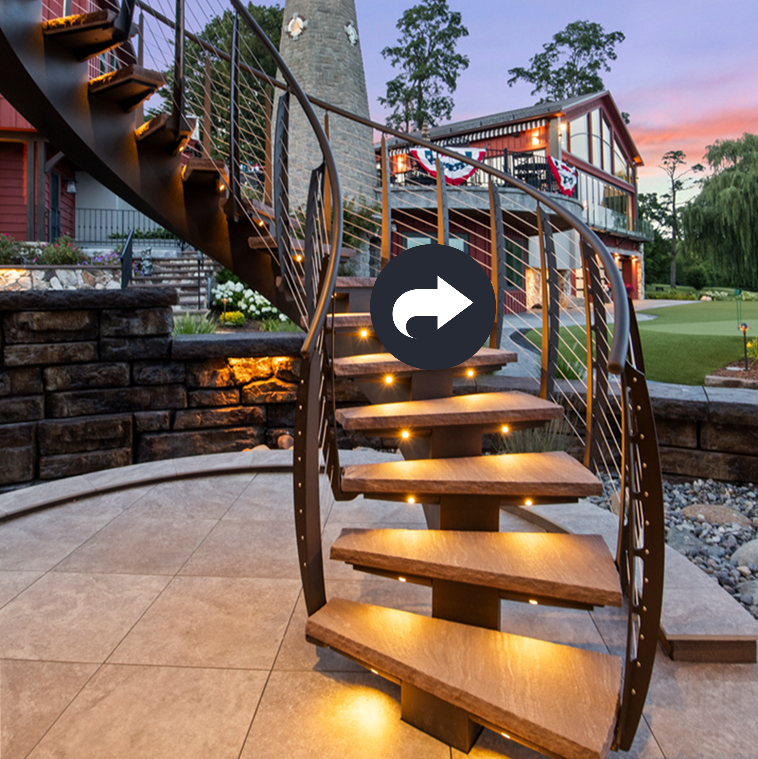
Exterior Hollow Form Helix Stairs
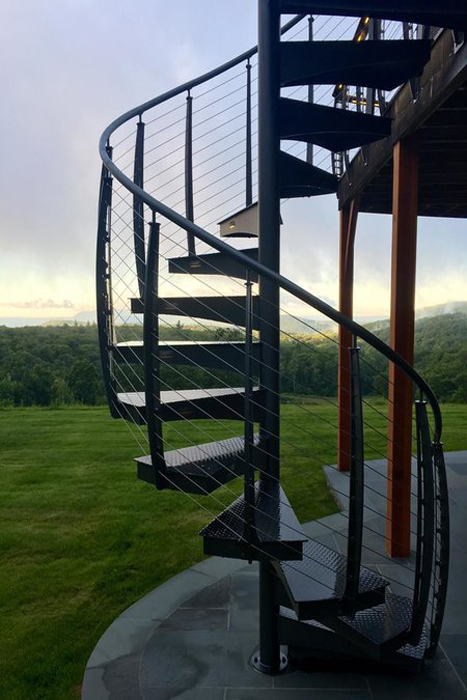
This exterior stair ascends gracefully from the ground to a rooftop walkway. The twisting form is enhanced by elegantly curved railing posts that complement the curved stringer.
Construction: Hollow-formed curved stringer made from laser-cut steel plate. The structure was analyzed with finite element analysis to ensure it could accommodate the weight of the brown stone treads and the large landing. In addition, CNC housings discreetly conceal the LED lighting. The Keuka style cable railing system wraps the entire curving
Design Process – Drawing, Rendering, and Reality
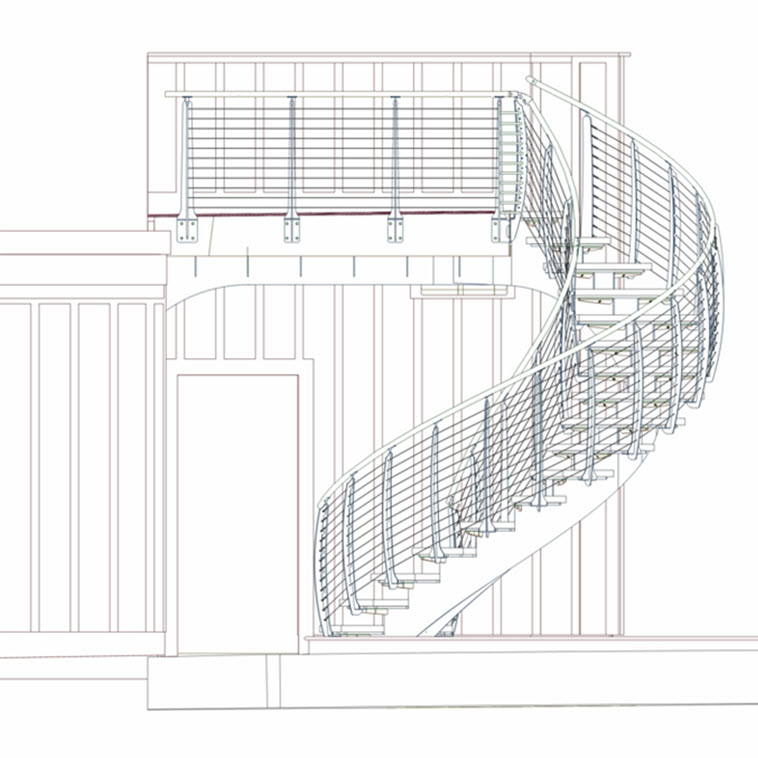
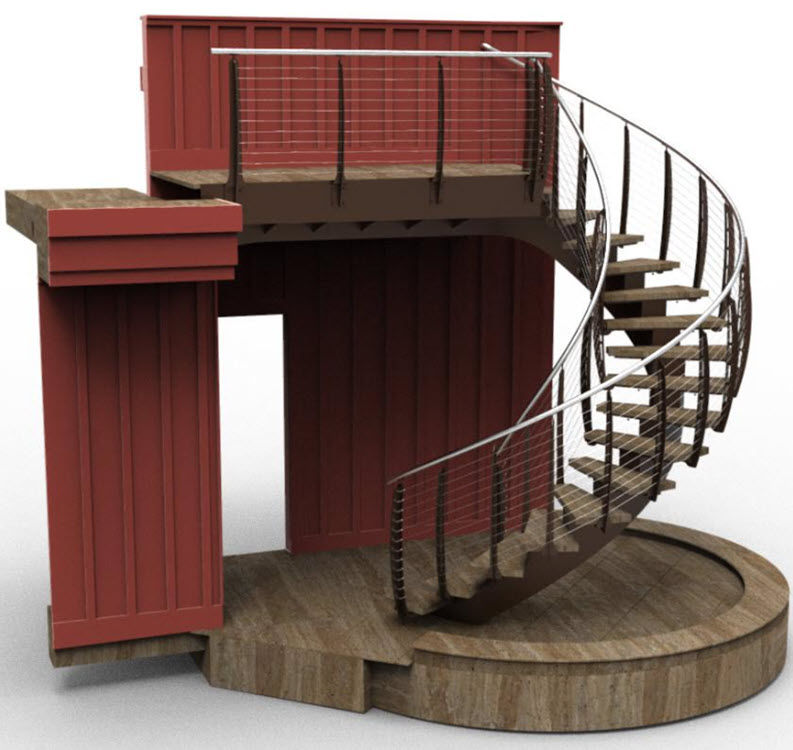
A helical stair flows from the floor to the next level in a circular direction, with or without a center pole. A stair with a helix shape and a center pole, is referred to as a spiral staircase. Without a center pole, it is referred to as a helical or curved stair; the latter is significantly more difficult to design and build.
Begin by taking accurate measurements of the available space and understanding the desired location of the top and bottom landings.
Spiral Stairs
Pros – A spiral stair is more compact and a popular choice for small spaces, such as condos or exterior decks. Since spiral stairs typically have a center pole and a landing that provide the support structure for the stairs, they may not need any additional support.
Cons – It can be difficult to navigate curved stairs and carry large items upstairs. Only one person can go up or down at the same time. Walkability improves as the outside diameter gets larger. We recommend an outside diameter of 5 feet.
Curved Stair
A curved stair without a pole tends to have a larger radius and typically does not make a full circle.
Pros– Curved stairs add elegance to any home and are relatively easy to ascend if the radius is large. Cons – They are by far the most difficult and most costly to build. They require more floor space than a spiral stair.
Every Keuka Studios design project is custom-built for your space. To learn more about how each curved stair project moves from vision to reality, take a look at our custom railing design process. We take pride in crafting high-quality, commercial-grade cable railings for both interior and exterior applications.
You may also like these posts: