4 Staircase Planning Mistakes That Can Cost You Later
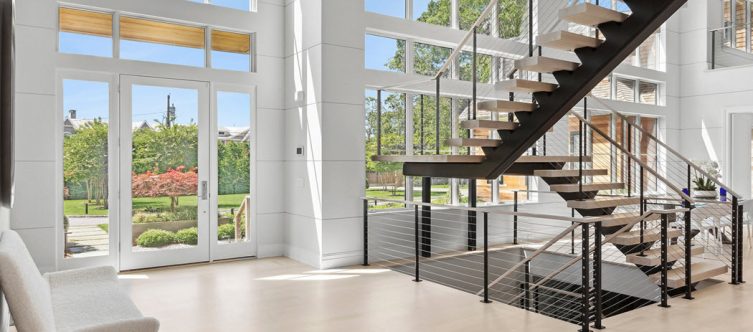
A Staircase is one of the most important structural and architectural elements in a home or business. Yet many costly stair problems begin long before fabrication or installation. Insufficient space, overlooked structural requirements, utility conflicts, and last-minute design changes can lead to expensive delays and compromises.
Whether you’re a homeowner, architect, builder, or interior designer, understanding these common staircase planning mistakes can help ensure your stair system is safe, comfortable, code-compliant, and visually stunning.
Thoughtful staircase planning begins in the earliest design stages. When stairs feel too steep, too narrow, or awkward to use, it’s usually the result of not allocating enough space for the stairs from the start. Understanding proper stair requirements and treating the stairs as a priority rather than leftover space is essential for creating a design that is both comfortable, safe, and beautiful.
Keep in mind that structural issues are difficult and costly to correct after the fact, but with careful, thoughtful planning, they can be avoided from the start.
Mistake #1: Not Leaving Enough Space For The Staircase
A staircase must meet code requirements while also functioning as a comfortable and efficient way to move between levels. In many cases, the stairs also serve as a key architectural feature. The primary elements to consider for space requirements include stair width, available vertical space, headroom, and overall rise and run (steepness) of the staircase.
Stair Width Too Narrow
Stair width is an important factor in both comfort and code compliance. While most residential codes require a minimum clear width of 36 inches, a width of 42-48 inches provides a far more comfortable and functional experience. A wider staircase also makes it far easier to move furniture or appliances between levels. In some cases, a floor plan designer may reduce stair width to maximize space in adjacent rooms, but this often comes at the expense of stair usability and overall comfort.
It’s also important to account for wall finishes, such as brick, wood paneling, or other materials, which can encroach on the available stair width and reduce the usable tread space if not properly planned for.
Insufficient Vertical Space or Headroom
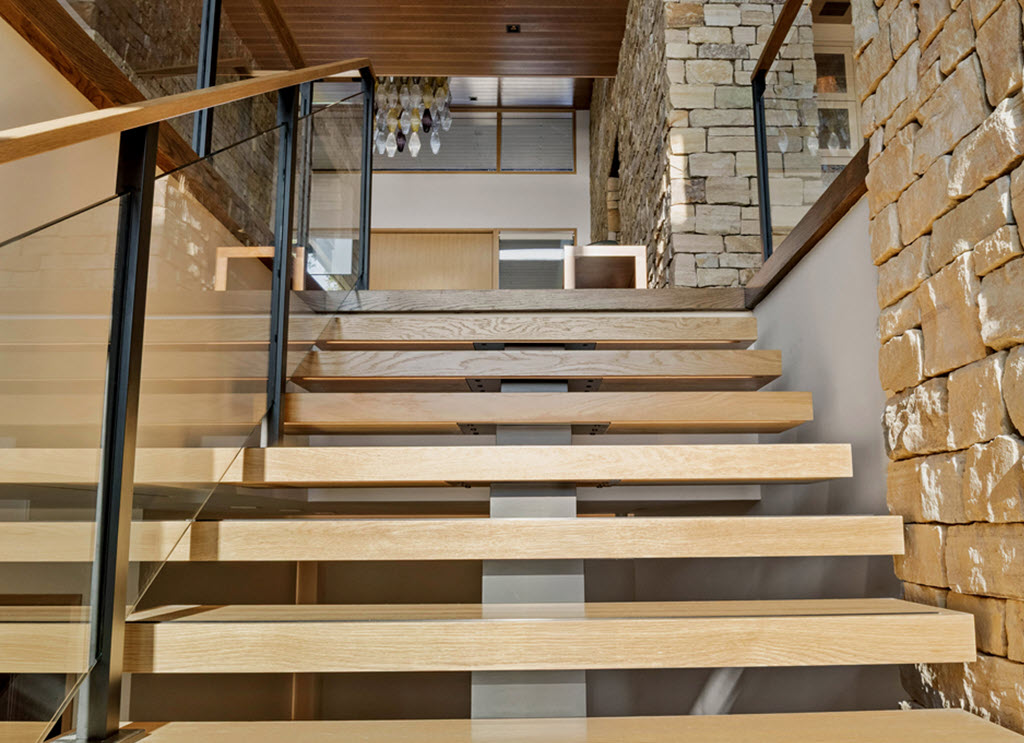
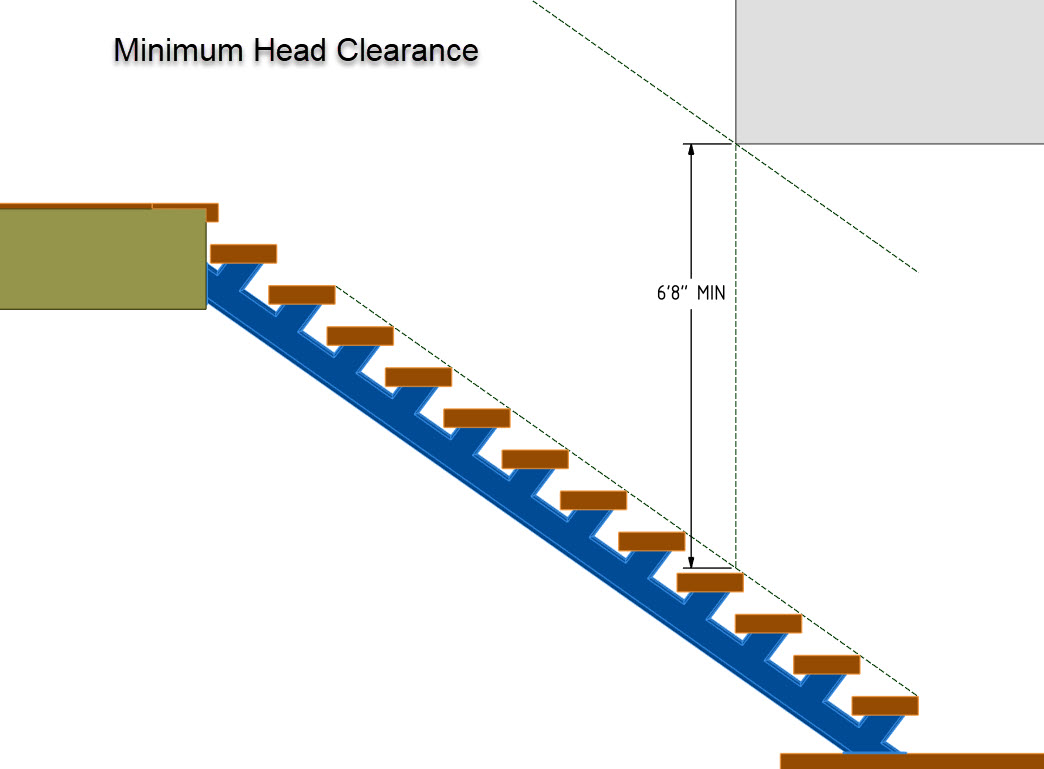
Vertical space, commonly referred to as headroom, is the clear distance between each stair tread and the ceiling or any structure above the stairs. It is a critical element to designing stairs that is sometimes overlooked in the design phase. Without adequate headroom, users risk hitting their heads while using the stairs, creating both a safety concern and an uncomfortable experience. Residential codes typically require a minimum headroom of 6 ft 8 in from the nosing of each tread to any overhead obstruction.
Beyond meeting code requirements, generous vertical space makes a staircase feel open, inviting, and easier to navigate. Insufficient headroom can make a stair feel tight, cramped, and uncomfortable. Headroom also plays a key role in the overall layout of the home, influencing floor openings, ceiling heights, and structural elements that must be considered early in the design process.
Addressing headroom issues after construction is complete can be extremely challenging, often requiring costly modifications or significant changes to the stair design.
Not Enough Floor Space – The Importance of Rise and Run
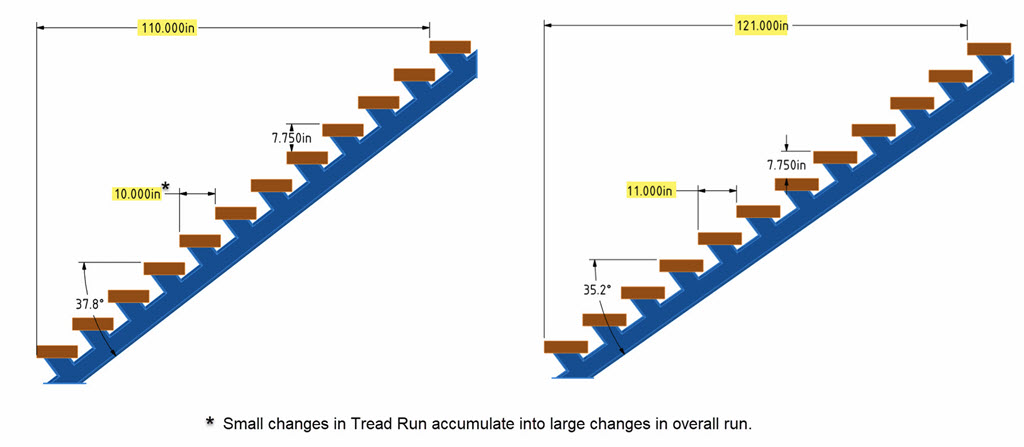
The rise and run of a staircase determine how a staircase feels and functions. The rise is the height of each step, while the run is the depth of the tread from the edge of the front of the nosing to the back of the tread. All of the risers must be the same height for each step, even a 1/4 in variation in height trips up human muscle memory, and the run of each tread must be the same to prevent a trip hazard.
These dimensions determine the slope of the stairs and how much floor space is needed. If the rise is too high and the run is too short, the stairs will be too steep. A steep staircase will require less floor space. A lower rise and longer run is more comfortable to ascend; however, it also requires more floor space. Residential codes typically require a maximum rise of 7-3/4 in and a minimum tread depth of 10 in.
When designing a custom staircase within an architectural structure, the rise and run of the stairs must be determined in advance to allow for the proper floor space without having any walls or structure interfere with where the staircase will be placed. The required rise and run must meet building code requirements R311.7.5
Mistake #2: Completing the Dry Wall and Finishes Before Installation
Another common mistake is finishing the drywall and flooring before the stairs are installed. Staircase construction often requires additional structural support or blocking within the walls and floors. When this is required, the finished flooring, wood trim, or drywall may need to be removed to install the support structure. Completing the finishes too soon can lead to costly rework and delays.
Structural Support to Reinforce the Walls
Depending on the type of staircase, structural support may be required to reinforce the walls and safely carry the weight of the stairs. For a cantilever staircase, this could involve a complex steel support system hidden within the wall. If the stairs have a cantilevered landing, it would require additional reinforcements to support both the stairs and the people using them.
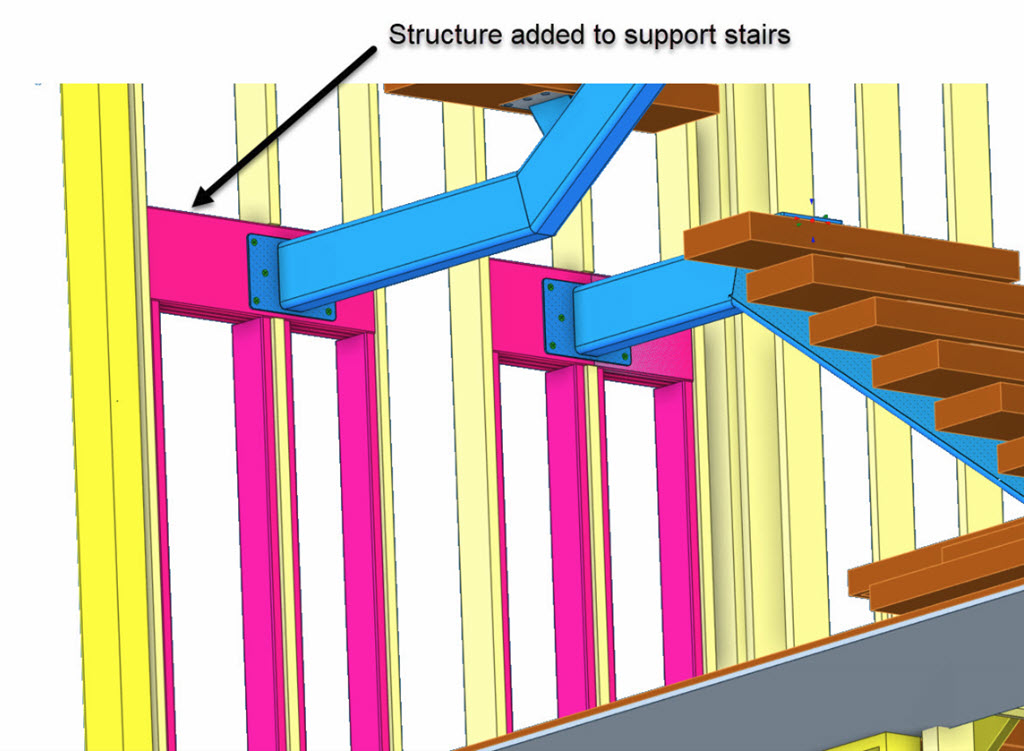
Blocking For Solid Attachment Points
Blocking refers to added short pieces of wood or metal installed between framing members to provide extra support, giving you a solid surface at the attachment point. Stair stringers must be securely attached at the top to the floor framing and at the bottom to the floor. If the stringer’s attachment point doesn’t have enough structural strength or material to screw into, additional blocking may need to be installed to properly support the stringer and ensure the stairs are safe.
Mistake #3 Overlooking Utilities: Plumbing, Electrical, and HVAC Conflicts
Staircase design should take into consideration the location of the utilities. Neglecting to plan for HVAC ducts, plumbing, and electrical wiring can restrict the type of staircase you can install and where you can install it. During construction, subcontractors may unintentionally use the stair area for running utilities, unaware of the space and support requirements, which can create conflicts and costly adjustments. The stair stringer connection points and structural support location need to be kept clear of obstacles to ensure proper installation and safe support of the stairs.
Mistake #4 Making Structural Changes Without Consulting Your Stair Manufacturer
In any construction project, unexpected conditions can arise that may require changes to the architectural structure. It’s crucial to consult with the stair manufacturer if these changes affect the area where the stairs will be installed. Early communication can sometimes lead to stair design adjustments that result in a more elegant, effective solution. Skipping this consultation step can lead to design conflicts, improper fit, and costly adjustments that could have been avoided with early communication.
Final Thoughts
A well-designed staircase is more than a means of moving between floors, it is a structural system, a safety feature, and often the focal point of the home. Most staircase problems can be traced back to architectural decisions that were not thought through during the design and construction process.
Plan and Build it Right the First Time
By allocating sufficient space, coordinating structural requirements before finishes are installed, preventing utility conflicts, and consulting your stair fabricator before making field changes, you can avoid costly delays and ensure a staircase that performs beautifully for decades.
Early planning almost always costs less than correcting problems after construction is underway.
The amount of space required depends on floor-to-floor height, stair width, ceiling height, and the desired rise and run. Most residential staircases require significantly more space than homeowners initially expect.
Most residential building codes require a minimum clear stair width of 36 inches. Although, wider stairs often provide greater comfort and functionality.
Adequate headroom prevents the user from striking overhead structures and helps create a more open and comfortable stair experience.
The stair manufacturer should ideally be consulted in the design phase and in the framing stage of construction. In addition, before any structural changes are made to the intended stair location. Such as changes to stair dimensions or installation requirements.
If you liked this blog, you may also like:
At Keuka Studios, we custom-fabricate residential and commercial stairs and railings to fit your style, space, and requirements. To learn more about how each railing project moves from vision to reality, take a look at our custom railing design process. We take pride in building premium craftsman-quality and commercial-grade cable railings for interior and exterior applications. Contact us to get your project started.