Metal Floating Stairs: What You Need to Know Before Investing in Custom Stairs
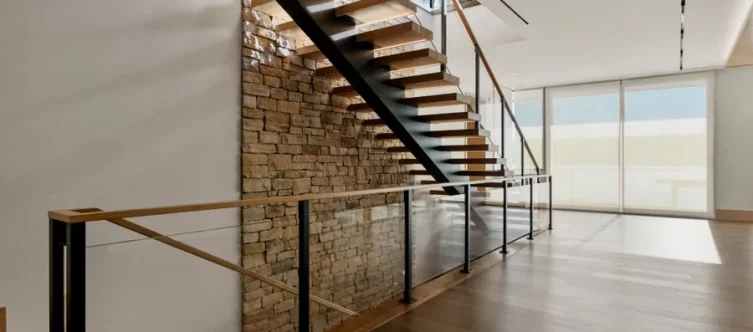
TL;DR: Metal floating stairs are striking architectural features that combine engineered strength with a minimalist, open aesthetic—but they require thoughtful planning and investment. This guide explains how modern floating stairs work, what they cost, and how to decide if they’re right for your space.
- What metal floating stairs are and how the floating stairs design achieves a “hovering” effect through partially concealed structure
- The main types of modern floating stairs, including cantilevered, mono-stringer, double-stringer, and hybrid systems
- Why metal floating stairs are more expensive than traditional staircases and what drives the cost
- When floating stairs are worth the investment as a long-term architectural feature
In contemporary architecture, metal floating stairs have become an essential feature. They’re especially popular in luxury residential and commercial spaces due to their clean lines, open sightlines, and sculptural forms.
The visual appeal of modern floating stairs is undeniable; however, they are also a higher-cost architectural option.
If you’re contemplating a custom staircase, you’ll need to know how floating stairs work structurally, how much they cost, and whether they’re right for your lifestyle. We’ve outlined everything you need to know, from safety and code compliance to maintenance and long-term value, so you can make an informed decision.
What Are Metal Floating Stairs?
Floating stairs are defined by their appearance, not by their lack of structure. Although they appear to hover in space, floating stair systems rely on structural support that is visually minimized and engineered to carry full loads safely and securely.
In most floating stair design applications, steel is the material of choice due to its strength and stiffness, which allow for thinner profiles, longer spans, and greater precision than wood alone. Aluminum may be used for select components, but is less common structurally. Minimalist stringers, embedded steel plates, or cantilevered tread connections anchored into structural walls or spines help achieve the floating effect.
Keuka Studios’ floating stairs are custom-designed and crafted. That’s because each project requires careful coordination between architects, engineers, and the client to ensure the stair meets aesthetic and structural goals while performing to code.
Types of Floating Metal Stair Designs
There are several ways floating metal stairs can be engineered, each with distinct advantages and limitations.
Cantilevered Metal Stairs
Cantilevered stairs feature treads that project from a structural wall, with no visible support beneath. This is one of the most visually striking forms of modern floating stairs, but also the most structurally demanding. Careful engineering is required to tie in the stairs to the structure of the home to support the significant loads.
Mono-Stringer Floating Stairs
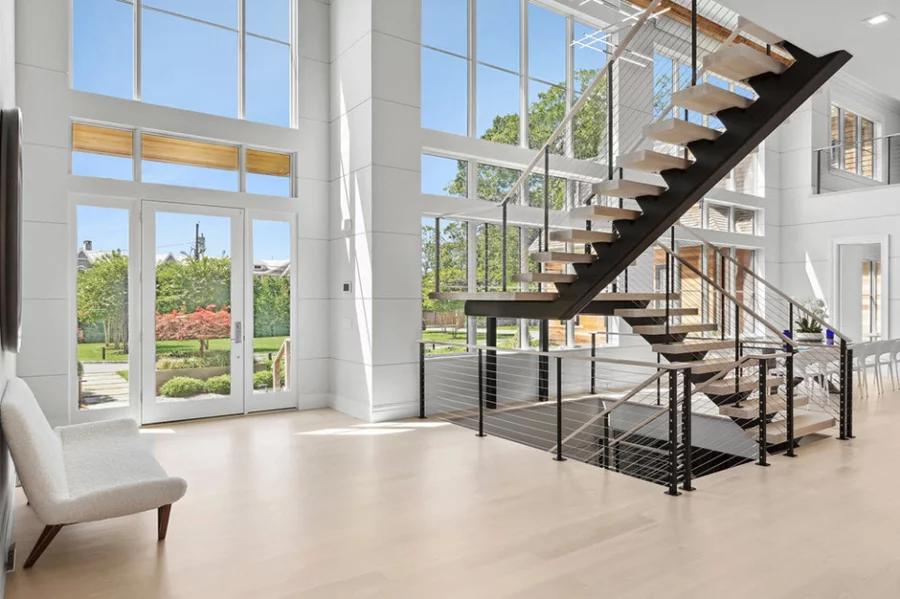
A mono-stringer staircase uses a single central steel spine to support the treads. This design balances openness with structural clarity and is one of the most popular floating stair solutions for custom homes.
Double-Stringer Floating Stairs
Double-stringer designs place steel supports along each side of the stair, allowing for wider treads and a stronger visual frame. This option often feels more substantial while still maintaining a floating appearance.
Hybrid Floating Systems
Hybrid designs blend metal frameworks with materials like wood, glass, or stone for the treads. Railing options such as glass panels, cable systems, or custom metal designs further elevate the look, allowing you to enhance openness, maintain clean sightlines, or introduce additional architectural detail. This allows for customized solutions that can improve comfort, reduce noise, and align with your preferred style.
Why Choose Metal for Floating Stairs?
Metal offers several advantages that make it ideal for floating stair construction:
- Structural strength with minimal visual mass
- Precision fabrication for clean lines and tight tolerances
- Compatibility with glass, cable, and metal railings
- Durability over time with proper finishing
From an architectural standpoint, metal allows floating stairs to look lighter while performing stronger. This is a key reason metal floating stairs dominate high-end residential and commercial projects.
Understanding Design and Code Compliance
When properly designed and fabricated, floating stair systems meet the same structural and safety standards as traditional staircases. The perception of risk often stems from their visual openness, such as open risers or minimal railings, rather than from the stairs’ structural integrity.
In practice, floating stairs are engineered to support full live loads and daily use. Safety is achieved through precise detailing, appropriate proportions, and material selection that balances performance with comfort. When these factors are addressed early, floating stairs can be just as safe as conventional staircases while offering a more refined architectural presence.
Are Floating Stairs Expensive?
Floating stairs often rely on load-bearing structures, concealed steel supports, or reinforced floor systems. These requirements can influence stair placement and may expand the scope of work in existing homes. Early coordination with architects and engineers is essential to determine feasibility and avoid costly adjustments later.
Stair treads also play a critical role in both performance and perception. Metal, wood, glass, and stone treads each offer distinct tactile, acoustic, and visual qualities. Thickness, edge detailing, and finish affect not only comfort underfoot but also how refined the staircase feels in daily use. In floating stair design, treads are never purely decorative—they are integral to the system’s function and longevity.
Railings must strike a careful balance between safety and aesthetics. To preserve openness while meeting code requirements, glass, cable, and minimal metal railings are commonly used. With thoughtful railing selection, the stairs feel light and modern without sacrificing security.
Space planning is equally important: floating stairs perform best when there is plenty of visual breathing room. Tight stairwells or low ceilings can diminish their impact and should be evaluated early in the design phase.
Because of these factors, floating stairs are typically more expensive than builder-grade closed-riser staircases, though costs ultimately depend on the stair type and level of customization. Key cost drivers include:
- structural engineering
- custom metal fabrication
- tread materials and finishes
- railing systems
- and installation complexity
So, are floating stairs worth it? For homeowners seeking only basic circulation between floors, a builder-grade staircase may be sufficient.
But for those who value architectural expression, light-filled interiors, and custom craftsmanship, modern floating stairs often deliver exceptional long-term value. When thoughtfully designed and expertly fabricated, they enhance openness, define the character of a space, and function as a lasting architectural centerpiece rather than a passing trend.
Making an Informed Investment
Floating metal stairs combine engineering precision with architectural elegance. While there are valid questions about their safety and costs, they are best answered through thoughtful design rather than assumptions.
When approached as a fully integrated architectural system, structure, treads, railings, and space, metal floating stairs offer a compelling blend of form and function. With expert planning and custom fabrication, they can transform a staircase from a necessity into a defining design feature that stands the test of time.
For projects where floating metal stairs are treated as true architectural features, Keuka Studios brings the expertise required to translate design intent into precision-built reality. We engineer custom stair systems to meet both aesthetic and structural requirements, including mono-stringer and cantilever designs.