Outdoor vs. Indoor Metal Railings: What Changes in Design, Materials, and Maintenance?
TL;DR: This guide explores how indoor metal railing design differs from outdoor metal railings, and why environment plays a critical role in materials, aesthetics, and long-term performance. Readers will learn how to choose the right railing system based on exposure, design intent, and maintenance expectations—without sacrificing style or durability.
- How indoor metal railing and outdoor metal railings differ in design priorities
- Key material considerations, including the best material for outdoor railing
- The role of modern metal railing design, clean lines, and curb appeal
- How staircase metal railing designs change based on interior vs. exterior use
- What to expect in terms of wear and tear, maintenance, and longevity
Metal railings play a dual role in architecture. They are functional safety features, but they are also highly visible design elements that influence how a space feels and performs over time. Whether you’re specifying an indoor metal railing for a grand staircase or selecting cable deck railings to frame an exterior view, the environment dramatically impacts how a railing should be designed, fabricated, and maintained.
Indoor and outdoor metal railings may appear similar at first glance, but they are shaped by very different demands. From material selection to long-term wear and tear, understanding these differences is essential for creating a railing system that performs beautifully for years to come.
How Environment Shapes Railing Design
The most fundamental difference between indoor and outdoor railings is exposure. Interior railings exist in a controlled environment, protected from moisture, UV radiation, temperature swings, and airborne contaminants. Exterior railings must withstand all of those elements—often simultaneously.
Environmental conditions influence every aspect of railing design, from structural engineering to finish selection. Both indoor and outdoor railings can incorporate refined detailing and visually lightweight elements. However, exterior railings must also account for durability, corrosion resistance, and long-term structural performance in exposed environments.
Indoor Metal Railings: Design Freedom and Precision
An indoor metal railing is often a visual centerpiece, drawing the eye, anchoring the architecture, and defining movement through a space. While both indoor and outdoor railings must meet the same structural requirements, including supporting loads and, in the case of cable railings, managing cable tension, interior installations benefit from being sheltered, which allows greater flexibility in finish selection, profiles, and detailing.
Design Priorities Indoors
Interior metal railing designs tend to focus on:
- Visual elegance and proportion
- Seamless integration with staircases and flooring
- Open sightlines and spatial flow
- Architectural continuity
This is where modern metal railing design shines. Clean geometry, minimalist profiles, and intentional restraint allow staircases to feel light and sculptural rather than heavy or utilitarian.
Staircase-Specific Considerations
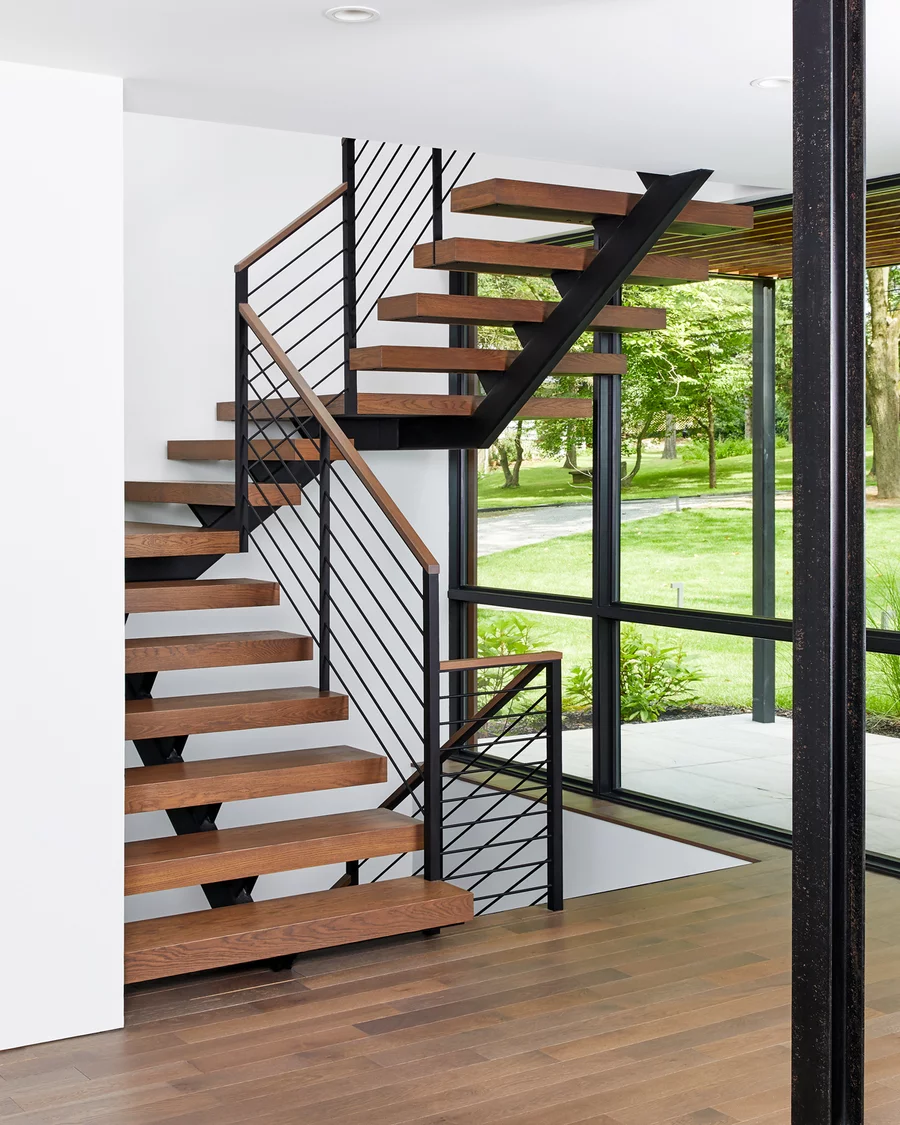
When it comes to stairs, staircase metal railing designs must align closely with the structure of the stair itself. Interior railings often follow floating treads, open risers, or curved stair forms, requiring precision fabrication and tight tolerances.
Both metal staircase railing designs and cable systems are popular indoors, especially when homeowners want to emphasize openness. Thin vertical posts, concealed fasteners, and subtle transitions help the railing complement, not compete with, the architecture.
Outdoor Metal Railings: Durability Meets Curb Appeal
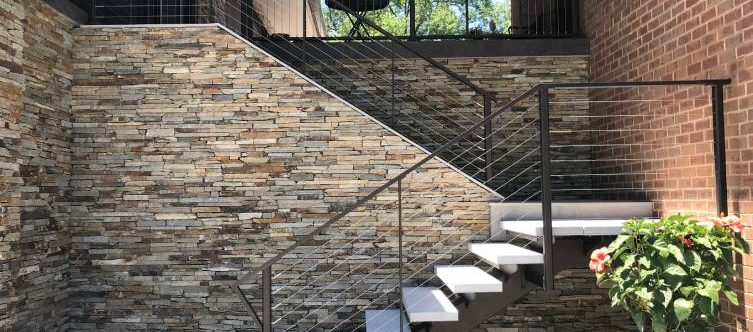
Exterior railings serve a different purpose. While they still contribute to aesthetics, they must first and foremost protect occupants and withstand the elements. Outdoor metal railings are constantly exposed to rain, snow, heat, wind, and UV radiation, all of which accelerate degradation if materials are not properly specified.
Design Priorities Outdoors
Outdoor railing design must account for:
- Structural integrity under environmental stress
- Long-term resistance to corrosion and fading
- Safety code requirements
- Visual impact on the home’s exterior and curb appeal
A well-designed exterior railing system enhances architecture while framing views, defining edges, and creating a sense of arrival. Poorly designed systems, by contrast, can detract from the home’s value and require frequent repairs.
Choosing the Best Material for Outdoor Railing
Material selection is one of the most important distinctions between indoor and outdoor railings. While interiors allow for a wider range of metals and finishes, exteriors demand materials engineered for longevity.
The best material for outdoor railing depends on climate, proximity to saltwater, and long-term maintenance expectations. In most environments, the most common exterior option is fully seal-welded steel railing with a multi-step prep process, including a zinc-rich epoxy primer and one or more polyester top coats. In saltwater or coastal environments, material selection becomes even more critical, and alternative systems designed for corrosion resistance are recommended.
- Stainless steel, especially in coastal or humid environments
- Hot-dip galvanized steel with a UV-resistant powder coating for added protection
- Aluminum, valued for corrosion resistance and lighter weight
- Bronze is also a durable, high-quality option for exterior applications.
These materials are chosen not only for strength but for how well they resist rust, pitting, and surface breakdown over time. Outdoor finishes must also protect against UV exposure, which can cause discoloration if improperly specified.
Cable Railings: Where Indoor and Outdoor Design Converge
Few railing styles bridge indoor and outdoor environments as seamlessly as cable systems. Cable deck railings, like the Keuka Style Railings, are widely used outdoors for their ability to preserve views, but they are increasingly popular indoors as well.
Inside, cable railings create a sense of openness and modernity, especially when paired with wood or metal staircases. Outside, they enhance decks, balconies, and terraces without obstructing sightlines. When wood is used in exterior applications, such as top rails or stair treads, the type of wood matters. IPE is one of the most popular choices, known for its durability and ability to perform well in exterior environments.
Maintenance: What Changes Over Time
Maintenance expectations vary dramatically between indoor and outdoor metal railings. Interior railings experience minimal wear and tear, typically limited to hand contact and occasional cleaning. Outdoor railings, on the other hand, must be designed with maintenance in mind from day one.
Indoor Maintenance
- Periodic cleaning to remove fingerprints and dust
- Occasional inspection of fasteners or cable tension
- Minimal long-term upkeep
Because they are protected, interior railings can retain their original finish for decades with proper care.
Outdoor Maintenance
- Regular cleaning to remove dirt, salt, and debris
- Inspections for corrosion, finish damage, or cable tension changes
- Potential refinishing over time depending on exposure
A thoughtfully designed outdoor railing system minimizes maintenance by selecting appropriate materials and finishes from the start.
Modern Railing Design: Balancing Form and Function
Whether indoors or outdoors, the most successful railing projects strike a balance between performance and aesthetics. Modern railing solutions prioritize clean lines, proportion, and intentional detailing—never excess.
Interior railings lean toward sculptural elegance and subtlety. Exterior railings emphasize strength, repetition, and visual rhythm while enhancing curb appeal. In both cases, the goal is the same: a railing that feels integral to the architecture rather than applied as an afterthought.
Making the Right Choice for Your Space
Choosing between indoor and outdoor metal railings isn’t just about location—it’s about understanding how environment influences design, materials, and long-term performance. What works beautifully inside may fail prematurely outside if not properly adapted.
By aligning railing design with environmental demands, selecting the right materials, and planning for maintenance, metal railings can elevate both interiors and exteriors with lasting impact.
Whether you’re refining a staircase with a refined indoor metal railing or framing a deck with high-performance cable deck railings, thoughtful design ensures your investment stands the test of time—both visually and structurally.