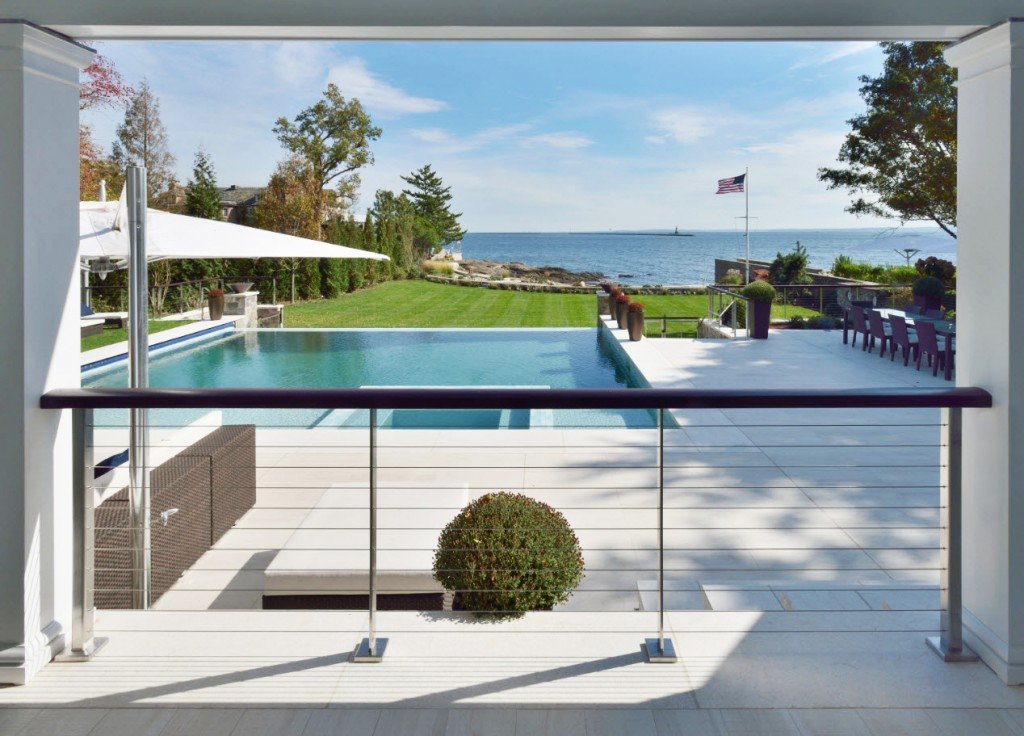
Stainless Steel Railing Cleaning Techniques
Although Stainless steel is generally considered a low-maintenance material, it is not maintenance-free. Not even 316 Stainless, the so-called Marine Grade Stainless, is immune to corrosion.
Thus, the name “Stain-Less”, not Stain-Free. Regular cleaning of your stainless
steel railings, fittings, and cables can help keep them looking attractive for many years. Harsh
environments like coastal settings, poolside areas, or locations near road salt will require more frequent maintenance to reduce tea staining. Tea staining is a superficial corrosion that appears as brown, rust-like discolorations on the surface of the stainless steel.
Regular maintenance: Frequent rinsing with freshwater will go a long way in preventing
tea-staining, rust, and grime. For dust and grime, use a pH-neutral, gentle soap and water with a soft microfiber cloth to gently clean the railing, followed by a thorough rinse with fresh water. Once cleaned, use a soft cloth to gently wipe the surface dry and apply a polish or protectant described below.
In more corrosive environments, stainless steel may become discolored over time. This cosmetic rust, known as tea staining, forms on the surface of the stainless steel. Generally, it’s a cosmetic issue and does not affect the structural integrity of the base metal. However, you should address it, because if left untreated, it can develop into surface pitting that’s difficult to remedy.
1) Start by thoroughly cleaning all the surfaces. We recommend using “CitriSurf 2310” to
remove the tea staining and rust (follow the manufacturer’s instructions). Use a very fine Scotch-Brite pad, being careful not to damage the brushed finish. Protect any nearby wood or stone to prevent discoloration if the cleaner spills on it.
2) For stainless steel cable and brushed stainless components (but NOT for mirror polished), we
recommend “Rust Rescue 200” protectant. Once the railing and cables are completely dry (from
the cleaning Step 1), apply Rust Rescue per the manufacturer’s recommendations. Reapply this periodically according to the manufacturer’s instructions.
The process of mirror polishing smooths out the pores in the metal, making it much less likely to tea stain in the first place. Regular polishing and protection will ensure it lasts for many years. This is why it is so commonly found on yachts. For cleaning, follow Step 1 above. Once the surface is properly prepared and dry, apply a high-quality stainless polish designed for mirror-polish finishes.
We recommend “Sea Shield Nano Coating”. See manufacturer’s directions. Afterward, once polished, allow 8-12 hours drying time before allowing the railing to get wet.
Citrisurf 2310 – purchase at The Rust Store
Rust Rescue 200 – purchase at The Rust Store
Sea Shield Nano Coating – purchase at Sea Shield
To prevent pitting, corrosion, and surface damage to your Keuka Studios railings
NEVER USE:
-Bleach (or any Hypochlorites) or any cleaners containing chlorides (chlorine, iodine, bromine).
-Muriatic acid, Hydrochloric acid cleaners, or any other harsh caustic solution.
-Abrasive cleaners, steel wool, metallic brushes, sandpaper, or scouring pads to clean the railing.
By following these steps, you can enjoy your stainless steel railing looking beautiful for years to come.
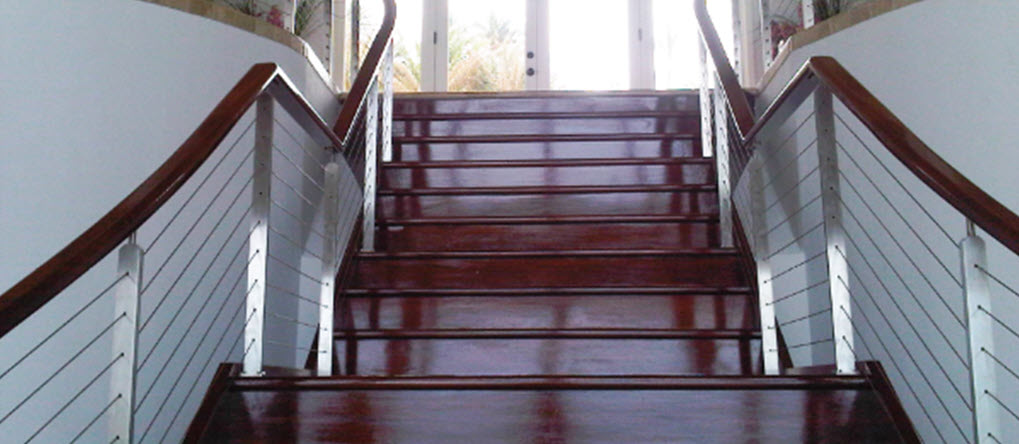
Check out this link For Stainless Steel Stair and Railing Ideas